

Latin America and Caribbean Advances on Weather Forecasting Workshop
Workshop Description
Extreme weather and climate hazard forecasting plays a fundamental role in mitigating climate risks across Latin America and the Caribbean (LAC), a region disproportionately affected by climate change. Increasingly frequent hydrometeorological hazards—including extreme temperatures, droughts, storms, hurricanes, and floods, confirm the urgency of accurate information and predictive tools. However, historical challenges such as fragmented observational networks and limited regional collaboration have hampered progress in developing tailored forecasting models and leveraging high-performance computing (HPC) solutions for climate and atmospheric research. In the meantime, the international community is moving from current-generation modeling tools (e.g., the Weather Research and Forecasting (WRF) model) to next-generation models that can take advantage of modern HPC systems (e.g., the Model for Prediction Across Scales – Atmosphere (MPAS-A). Furthermore, as AI and ML advance their capabilities and are increasingly adopted, questions remain regarding the convergence between weather forecasting and these technologies.
This workshop seeks to establish a collaborative platform for the LAC weather and climate community to address these gaps. It will bring together the community to discuss the strategic and technical future of weather forecasting. We will include presentations by invited speakers and technical/user experience talks that will showcase advances in regional modeling, model adaptations and development, use or creation of new models, and the fostering of partnerships. An emphasis will be placed on integrating local climatic characteristics into predictive frameworks.
Contact
For questions, please email workshops@cybercolombia.org
Location
Grand Jamaica (Montego) Suite
Schedule
Date: September 23, 2025
Duration: Full day workshop
| SESSION | TIME (All times are in local Jamaica Time) |
|---|---|
| Opening Remarks – Evan G. Thompson (President, Regional Association IV, World Meteorological Organization and Principal Director of Meteorological Service of Jamaica) | 9:00 AM – 9:10 AM |
| Integrating Climate Change into Mesoscale Modeling for Jamaica Jacqueline Spence-Hemmings and Rohan Brown (Meteorological Service of Jamaica) |
9:10 AM – 9:30 AM |
| Weather and Climate Modeling by Ideam Instituto de Hidrología, Meteorología y Estudios Ambientales (Colombia) |
9:30 AM – 9:50 AM |
| Applying AI Weather Models with NVIDIA Earth-2 Pablo Mário Cruz e Silva (NVIDIA) |
9:50 AM – 10:20 AM |
| Keynote Presentation: Predictions of tropical cyclones with NWP and machine-learning
based forecasts at ECMWF Linus Magnusson (ECMWF) |
10:20 AM – 11:00 AM |
| Morning Coffee Break | 11:00 AM – 11:30 AM |
| Utilizing numerical modeling in operational forecasting in the
Caribbean Arlene Laing (CMO) and Emmanuel Cloppet (Meteo-France) |
11:30 AM – 12:00 PM |
| AI Roadmap for WMO Integrated Processing and Prediction System (WIPPS) and WIPPS
Pilot Projects Ken Mylne (WMO/INFCOM/ET-OWFS; UKMO) and Yuki Honda (WMO) |
12:00 PM – 12:20 PM |
| Keynote Presentation: WRF and MPAS-Atmosphere: Looking to the
Future Michael Duda (NSF NCAR) |
12:20 PM – 1:00 PM |
| Lunch Break | 1:00 PM – 2:00 PM |
| Tomorrow.io Resilience Platform – A New Paradigm for Weather Forecasting in Latin
America and the Caribbean Cesar Beneti |
2:00 PM – 2:20 PM |
| Data assimilation and numerical forecasting system at the National Meteorological
Service of Argentina Yanina Garcia Skabar (National Meteorological Service of Argentina) |
2:20 PM – 2:40 PM |
| Adaptive Mesh Generation for MPAS-A: Focus on Tropical Weather Systems in the
Caribbean Ashford Reyes (CIMH) |
2:40 PM – 3:10 PM |
| Keynote Presentation: The pressing climate emergency and the imperative to advance
climate modeling Saulo R. Freitas (INPE) |
3:10 PM – 4:00 PM |
| Afternoon Coffee Break | 4:00 PM – 4:30 PM |
| Analysis-Ready, Cloud-Optimized Data Formats for Scalable Weather and Climate
Science Alfonso Ladino (University Of Illinois) |
4:30 PM – 4:50 PM |
| Strategic Forum: Challenges and Opportunities for Latin America in
Climate and Atmospheric Forecasting in Turbulent Times – Moderated by Esteban
Hernández (CyberColombia) – Saulo Freitas: INPE – Michael Duda: NSF NCAR – Arlene Laing: CMO |
4:50 PM – 5:50 PM |
| Closing Remarks and Conclusions | 5:50 PM – 6:00 PM |
Workshop Keynote Talks
Keynote: The pressing climate emergency and the imperative to advance
climate modeling
Saulo R. Freitas
Talk Description: This talk introduces the MONAN program (Model for Ocean-laNd-Atmosphere predictioN), a Brazilian community program led by the National Institute for Space Research (INPE) that proposes a new paradigm in focus and organization for modeling the Earth System, bringing the country to the state-of-the-art in weather, climate, and environmental forecasting.
Speaker Bio: Saulo R. Freitas is a researcher specializing in meteorology and
atmospheric sciences. He holds a D. Sc. in Applied Physics from the University of São Paulo.
Additionally, he conducted postdoctoral research at the NASA Ames Research Center and served as a
Visiting Researcher at the Earth System Laboratory Research (NOAA). Currently, he is a Senior
Researcher and Professor in the Graduate Program in Meteorology at the Brazilian Institute for Space
Research (INPE). His research focuses on air pollution and atmospheric chemistry associated with
wildfires, convection parameterization, and numerical weather forecasting integrated with
atmospheric chemistry and aerosols.
Keynote: WRF and MPAS-Atmosphere: Looking to the Future
Michael Duda
Talk Description to come
Speaker Bio: Michael Duda is a Software Engineer in the Mesoscale and Microscale Meteorology Laboratory at the U.S. National Science Foundation National Center for Atmospheric Research (NSF NCAR). He has over a decade of experience working with the Weather Research and Forecasting (WRF) model software, and he is one of the principal developers of the WRF Pre-processing System, which he also maintains and supports to the user community. Michael is one of the primary architects of the Model for Prediction Across Scales (MPAS) software framework and infrastructure, and more recently, his work has focused on the computational performance of the atmosphere component of MPAS. He is particularly interested in extensible software design and algorithms of all sorts. Michael holds an M.S. in Computer Science from the University of Colorado.
Strategic Forum: Challenges and Opportunities for Latin America in Climate and Atmospheric Forecasting in Turbulent Times
Saulo R. Freitas is a researcher specializing in meteorology and atmospheric sciences. He holds a D. Sc. in Applied Physics from the University of São Paulo. Additionally, he conducted postdoctoral research at the NASA Ames Research Center and served as a Visiting Researcher at the Earth System Laboratory Research (NOAA). Currently, he is a Senior Researcher and Professor in the Graduate Program in Meteorology at the Brazilian Institute for Space Research (INPE). His research focuses on air pollution and atmospheric chemistry associated with wildfires, convection parameterization, and numerical weather forecasting integrated with atmospheric chemistry and aerosols.
Michael Duda is a Software Engineer in the Mesoscale and Microscale Meteorology Laboratory at the U.S. National Science Foundation National Center for Atmospheric Research (NSF NCAR). He has over a decade of experience working with the Weather Research and Forecasting (WRF) model software, and he is one of the principal developers of the WRF Pre-processing System, which he also maintains and supports to the user community. Michael is one of the primary architects of the Model for Prediction Across Scales (MPAS) software framework and infrastructure, and more recently, his work has focused on the computational performance of the atmosphere component of MPAS. He is particularly interested in extensible software design and algorithms of all sorts. Michael holds an M.S. in Computer Science from the University of Colorado.
Dr. Arlene Laing is the Coordinating Director of the Caribbean Meteorological Organization (CMO), a specialized agency of the Caribbean Community (CARICOM) that coordinates joint scientific and technical activities in weather, climate and water-related sciences in 16 English-speaking Caribbean countries. Dr. Laing is a member of the World Meteorological Organization (WMO) Executive Council, Research Board, and Panel on Socio-economic Benefits. She is known for studying tropical and mesoscale meteorology; large thunderstorm systems; flash floods and mitigation; satellite meteorology; lightning and El Niño; tropical cyclone rainfall and genesis; weather, climate, and meningitis; climate and armed conflict; and volcanic ash fall modelling. She is the lead author of “Introduction to Tropical Meteorology”, a peer-reviewed online textbook used globally. She is also a co-author and Editorial Committee member of the award-winning, “Meteorology of Tropical West Africa; The Forecasters’ handbook”. In 2021, she was recognized as a 125th Anniversary Fellow by the College of Earth and Mineral Sciences of The Pennsylvania State University. The CMO is an admitted Inter-Governmental Organization of the UNFCCC.
Submission Types
Full Papers
Submissions for full papers must be unpublished and not under review
elsewhere.
Length: 8-15 pages
Language: English (Official
language of the CARLA Conference)
Peer Review: Single-blind, reviewed by at
least two experts
Proceedings: The selected papers will be published in the
Latin American journal Avances en Ciencias e Ingeniería
(ACI). Submission guidelines (in Spanish) are available on Avances en Ciencias e
Ingeniería (ACI) You may use your browser’s translation feature if
needed.
Please note that the journal provides its official template only in Microsoft Word
format. We have created an initial LaTeX
version that aims to match the original as closely as possible, and it is attached for
your convenience, if consider you would develop an improved version of it.
Technical/User Experience Talks
Language: English (Official language of the CARLA Conference)
Submissions should include a title and a 1 – 2 page abstract
describing the experiences that will be presented in a short talk during the workshop, if selected.
Please submit the abstract in PDF or Word Document form at the submission website linked below.
There are no additional formatting requirements for the abstract.
If selected to give a talk, the
final presentation slides shall be provided to the organizers nearer to the workshop date.
Submission Guidelines
To begin the submission process for either a full paper or a technical/user experience talk, please
register an account in the submission
site and add your submission, ensuring that you have followed the details given above
regarding your submission type.
Submission Website: https://meteor.springer.com/carla2025
Important Note: In order to attend the workshop, you must register for the CARLA2025 conference. Please see registration details here.
Submission Deadlines
- Paper/Technical Talk submission deadline: August 15, 2025.
- Paper/Technical Talk author notification: August 22, 2025.
- Camera-ready version: September 5, 2025.
- Workshop Date: September 23, 2025
Topics of Interest
Areas of interest include, but are not limited to:
- Advances in regional Numerical Weather Prediction (NWP) for LAC
- Development and adaptation of high‑resolution regional models (e.g., WRF, MPAS‑A) suited to Latin American and Caribbean climatic and topographic diversity
- Next‑Generation High Performance Computing in Forecasting Models
- Strategies to leverage modern HPC architectures, such as GPU clusters and exascale systems, to run scalable, multi‑scale atmospheric simulations
- Multiresolution and Multimodel Integration
- Methods to fuse outputs from nested-resolution and ensemble modeling systems, enhancing reliability while optimizing computational cost
- Data Models & Assimilation Schemes for a Fragmented Observational
Network
- Innovative assimilation techniques that incorporate heterogeneous datasets: remote sensors, regional weather stations, satellite data, and IoT‑enabled platforms
- Modeling ENSO and Other Regional Climate Drivers
- Incorporation of ENSO phases, Amazon variability, Andean climatic influences, and teleconnection patterns into forecasting systems tailored to LAC
- AI/ML‑Enhanced Forecasting: Convergence with NWP
- Integration of machine learning with classical models—hybrid architectures, surrogate modeling, downscaling, and bias correction approaches
- End‑to‑End Operational Pipelines: From Research to Production
- Deploying research-grade models into operational forecasting platforms, including tools for visualization, dissemination, and stakeholder integration
- Cross‑Institutional & Regional Collaboration Frameworks
- Design of shared platforms and partnerships for model code:
- Standardization of datasets and metadata
- Interoperability across national meteorological institutions
- Best practices for model version control and joint development.
- Design of shared platforms and partnerships for model code:
Organizing Committee

PhD. Esteban Hernández
CyberColombia

Michael Duda
NSF National Center for
Atmospheric Research

PhD. Saulo R. Freitas
INPE

PhD. Arlene Laing
Caribbean Meteorological
Organization (CMO)

PhD. Jose Monsalve Diaz
AMD
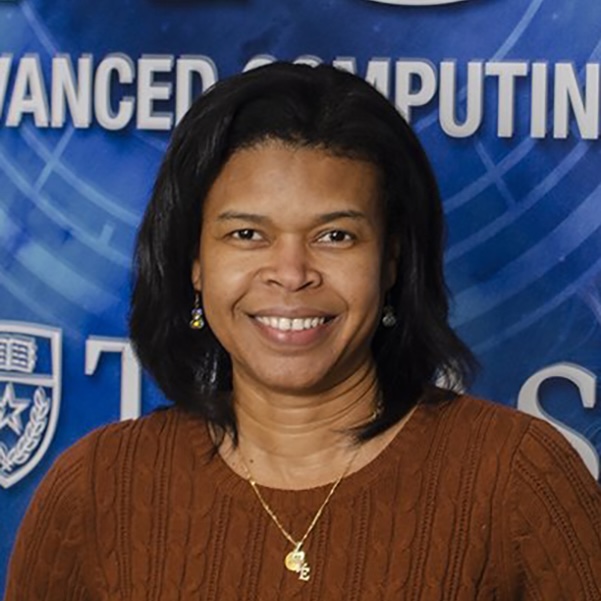
Natalie Henriques
TACC

Katherine Rasmussen
Lawrence Berkeley
National Laboratory