
Accelerating Biomedical and Personalized Medicine through Digital Twins, In Silico Clinical Trials, AI/HPC
Chairs Workshop
- John Garcia-Henao – Balgrist University Hospital, Switzerland.
- Elmer Fernández – Universidad Nacional de Córdoba, Córdoba, Argentina.
Description of the workshop
The 8th edition of the BioCARLA workshop continues to serve as a key forum within the CARLA conference series, bringing together experts in bioinformatics, biomedical engineering, high-performance computing (HPC), and artificial intelligence. In alignment with the PASC26 minisymposium1, BioCARLA 2026 focuses on AI-driven in-silico clinical trials (ISCTs) and medical digital twins as emerging paradigms for accelerating biomedical and personalized medicine.
While AI has achieved strong performance in isolated clinical tasks, current systems remain limited in multimodal reasoning, generalization, and clinical integration. This workshop explores how large multimodal models (LMMs) and computational patient models enable the transition from single-task AI systems to virtual patient cohorts and in-silico experimentation.
BioCARLA 2026 aims to bridge AI research, HPC, and clinical practice, fostering interdisciplinary collaboration toward scalable, trustworthy, and clinically actionable virtual trial frameworks.
The workshop centers on five key challenge areas:
- Multimodal integration of imaging, clinical, omics, and sensor data
- Embedding clinical and physiological knowledge into AI models
- Trustworthy AI: interpretability, robustness, and validation
- Data governance, privacy, and ethical AI deployment
- Scalable infrastructure using HPC, federated, and distributed systems
Submission format
BioCARLA 2026 will feature a mix of peer-reviewed papers and invited contributions, with a focus on reproducibility, methodological rigor, and translational relevance. The program is committed to a fair and streamlined peer-review process.
Proposed program committee (to be confirmed)
- Kary Ocaña, National Laboratory of Scientific Computing, Brazil
- Francisco Martínez, Industrial University of Santander, Colombia
- Carla Osthoff, National Laboratory of Scientific Computing, Brazil
- Dante Travisany, Americas University, Chile
- Denis Jacob Machado, University of North Carolina at Charlotte, USA
- Fabricio Alves Barbosa da Silva, Oswaldo Cruz Foundation, Brazil
- Gustavo Fioravanti Vieira, Universidade La Salle, Brazil
Call for papers
We invite high-quality submissions addressing the development, validation, and deployment of AI-driven in-silico clinical trials, digital twins, and multimodal biomedical AI systems. Contributions may include theoretical advances, computational frameworks, and real-world clinical applications.
We welcome two types of contributions:
- Regular papers: 6-8 pages, including figures and references, to be presented as oral talks.
- Short papers: Up to 2 pages, for poster presentations.
Submission Guidelines
All submissions must follow the formatting and submission rules provided by CARLA 2026:
- Paper submission: https://carlaconference.org/call-papers/
- Poster submission: https://carlaconference.org/call-posters/
Accepted papers and posters will be included in the CARLA 2026 workshop proceedings.
Topics of Interest
- Development and application of small and foundation models in biomedical and life sciences.
- Predictive modeling of disease risk, patient outcomes, and treatment response using AI.
- Multimodal learning integrating omics, clinical text, imaging, and phenotypic data.
- Interpretability, fairness, and trust in biomedical AI and clinical decision systems.
- Federated learning and privacy-preserving AI for distributed biomedical research.
- Training and deployment of efficient biomedical language models and domain-specific LLMs.
- Integration of HPC, cloud, and edge computing for bioinformatics and AI workflows.
- Design and optimization of HPC-enabled workflows for multi-omics and systems biology.
- Big data analytics and performance evaluation of omics pipelines using HPC infrastructure.
- Network biology, evolutionary modeling, and functional annotation using AI and HPC.
- Benchmarking datasets, reproducibility, and standardization for biomedical AI models.
- Real-world applications of small and foundation models in drug discovery, clinical documentation, and genomics.
Previous workshop editions
- BioCARLA 2025 Workshop in Kingston, Jamaica. September 22 to 26, 2025
- BioCARLA 2024 Workshop in Santiago de Chile, Chile. September 30 to October 4, 2024.
- BioCARLA 2023 Workshop in Cartagena de Indias, Colombia. September 18 to 22, 2023
- BioCARLA 2022
Workshop Keynote Speakers

Laurent Dardenne (LNCC – Brasil)
Title: AI-Driven In Silico Drug Design with DockThor and the Santos Dumont Supercomputer
Short Bio:
Prof. Laurent Dardenne is currently a researcher at the National Laboratory for Scientific Computing, Brazil, and leads the Molecular Modeling of Biological Systems Group. He has experience in Biophysics, with an emphasis on Molecular Modeling, working primarily in drug design and protein structure prediction, with an emphasis on developing algorithms, computational methods, and programs using artificial intelligence and computational techniques. His research group developed the DockThor program and the DockThor-VS web server (https://www.dockthor.lncc.br) to conduct virtual compound screening experiments.

Ricardo Armisen (Universidad del Desarrollo – Chile)
Title: PresicionAI
Short Bio:
Dr. Ricardo Armisén is a physician and scientist holding an MD and a PhD in Biomedical Sciences from the Universidad de Chile, followed by a postdoctoral fellowship at the Howard Hughes Medical Institute at Stony Brook University. He currently serves as a full Professor and Researcher at the Center for Genetics and Genomics (ICIM) and directs the Functional Cancer Genetics Laboratory at the Universidad del Desarrollo.
Recently appointed as the Director of the PRECISION-AI Technological Program, Dr. Armisén’s research lies at the forefront of precision oncology and artificial intelligence. His work harnesses advanced machine learning architectures to analyze complex multi-omic datasets, predict disease progression, and identify novel vulnerabilities in cancer cells. By translating computational models and next-generation sequencing into clinical applications, his research aims to solve concrete clinical challenges and advance the future of personalized medicine.
Abstract: This presentation explores the transformative impact of integrating molecular data, clinical information, and artificial intelligence (AI) on research and decision-making within precision medicine. Bridging basic science and clinical application, the talk highlights how these technological advancements address critical healthcare inquiries, with a particular focus on oncology. Through the examination of applied, real-world research cases, we demonstrate the efficacy of combining genomics and AI to solve concrete clinical challenges. Key applications include predicting therapeutic responses across various cancer types and leveraging molecular profiling for accurate disease staging at diagnosis. Ultimately, these integrated approaches enhance clinical decision-making and facilitate the advancement of highly personalized therapeutic strategies.
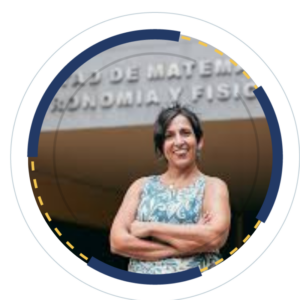
Veronica Marconi (Famaf- Argentina)
Title: HPC to improve assisted reproductive technologies
Short Bio:
Veronica Marconi is an expert in microfluidics, a branch of physics that has driven major advances in biology and medicine in recent years. It studies the behavior of fluids in microscopic volumes, where liquids and gases behave differently than when using a garden hose or filling a CNG tank.
Abstract: Discover how cutting-edge computational modeling is advancing assisted reproductive technologies! This talk highlights the development of ultraconfined microfluidic devices designed to improve sperm sample quality for infertility treatments. Learn how researchers leverage High-Performance Computing (HPC) and Langevin dynamics to simulate large populations of sperm navigating micrometer-scale channels under low-Reynolds-number regimes. By incorporating real experimental motility data, this work demonstrates how optimizing microchip geometry can lead to more efficient, portable, and affordable clinical solutions worldwide. Join us to explore the intersection of fluid mechanics, biophysics, and high-performance simulation!
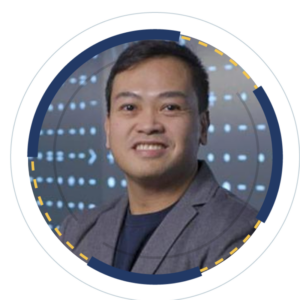
Leo Anthony Celi (MIT – USA)
Title: Fast Data, Slow Wisdom
Short Bio:
Leo Anthony Celi is part of the team behind the Medical Information Mart for Intensive Care, or MIMIC, a database now stewarded by over 100,000 credentialed students and researchers across the globe. The group has championed open science as a moral imperative: knowledge generated from patients must be returned to communities rather than sequestered behind institutional gatekeeping. Science must earn, and continually re-earn, public trust, and rigorous inquiry must be humble enough to learn from lived experience and ways of knowing that resist quantification. Through workshops and hands-on data analysis across the globe, his team shows that modeling data without understanding how it came to be is epistemic violence. It is like cooking without knowing the ingredients, whether nuts, shellfish, or cyanide. The dish may taste exquisite to those seated comfortably at the table, but a model trained on such data industrializes historical harm, encoding injustice into algorithmic certainty at scale.
Abstract: The AI revolution in healthcare is unfolding at a pace that outstrips our ability to understand what these systems do once they enter the clinic. Investment and deployment have raced ahead while the harder questions, about whose data trains the models, whose care patterns they encode, and who bears the cost when they fail, remain largely unexamined. This talk draws on a year of conversations across the MIT Critical Data community to argue that the current moment demands more than technical fixes. If data carries the imprint of the society that produced it, then the machinery built on that data will reproduce existing disparities unless the people historically excluded from health innovation are given real power to shape it. The talk makes the case that the AI revolution will only deliver on its promise when evaluation moves from models to the systems around them, when accountability becomes a collective practice rather than a corporate claim, and when the conversation leaves the conference hall for the barbershop, the church, and the football field.
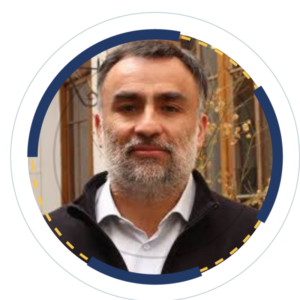
Marcelo Andia Kohnenkampf (Universidad Católica de Chile – Chile)
Title: Artificial intelligence in medical imaging: A great opportunity to increase accessibility to radiological technology in Latin America.
Short Bio:
Marcelo Andia is a civil engineer and medical doctor from the Pontificia Universidad Catolica de Chile. He earned a PhD in Imaging Sciences from the School of Medicine at King’s College London in the United Kingdom. He is currently an associate professor in the Department of Radiology at the School of Medicine of the Pontificia Universidad Catolica de Chile. He is the Deputy Director of the Millennium Institute in Engineering and Artificial Intelligence for Health (i-Health) and the Director of Artificial Intelligence in Healthcare at the Faculty of Medicine of the Pontificia Universidad Catolica de Chile
Abstract: Medical imaging is fundamental to modern medical diagnosis. However, its access and availability in Latin American countries is very limited. High investment and operating costs, along with the need for qualified personnel for image acquisition and interpretation, restrict its widespread use. New AI applications in biomedical imaging have shown potential to reduce this gap. In this seminar, we will discuss how new advances in AI for biomedical imaging can significantly change the future of healthcare in Latin America.
| Time | Session | Presentation Title | Speaker |
|---|---|---|---|
| 09:00 – 09:10 | Introduction | Introduction | |
| 09:10 – 10:00 | Keynote | AI-Driven In Silico Drug Design with DockThor and the Santos Dumont Supercomputer | Dardenne, Laurent (LNCC – Brasil) |
| 10:00 – 10:30 | Invited Talk | PresicionAI | Armisen, Ricardo (Universidad del Desarrollo – Chile) |
| 10:30 – 11:00 | Invited Talk | HPC to improve assisted reproductive technologies | Veronica Marconi (Famaf – Argentina) |
| 11:00 – 11:30 | Coffee Break | ☕ Coffee Break | |
| 11:30 – 12:00 | Invited Talk | Fast Data, Slow Wisdom | Leo Anthony Celi (MIT – USA) |
| 12:00 – 12:30 | Invited Talk | Artificial intelligence in medical imaging: A great opportunity to increase accessibility to radiological technology in Latin America. | Marcelo Andia Kohnenkampf (Universidad Católica de Chile – Chile) |
| 12:30 – 12:50 | Discussion Panel | Discussion Panel | |
| 12:50 – 13:00 | Conclusion | Conclusion |
- Keynote: (40 min + 10 min Q&A)
- Invited Talk: (25 min + 5 min Q&A)
- Discussion Panel: (1 hour)