
Advancing Career Pathways and Broad Access in High Performance Computing

Chairs Workshop
- Paola A. Buitrago, Carnegie Mellon University & Pittsburgh Supercomputing Center, USA
- Veronica Gil-Costa, Universidad Nacional de San Luis, Argentina
Description of the workshop
High Performance Computing (HPC) is rapidly evolving toward heterogeneous architectures, large-scale distributed systems, and integration with Artificial Intelligence. Sustaining this growth requires expanding participation and enabling strong career pathways across a broad talent base.
This workshop, organized by the Latin American and Caribbean Chapter of Women in HPC (LAC-WHPC), focuses on career progression, leadership development, and broad access to opportunities in HPC. It builds on prior CARLA workshop editions and extends these efforts across the region.
The workshop integrates three dimensions:
- Technical: Contributions in AI+HPC, distributed systems, observability, and heterogeneous computing
- Workforce Development: Mentorship, education, and pathways into HPC careers
- Strategic: Institutional practices, collaborations, and funding opportunities that support sustained participation Aligned with CARLA’s mission, the workshop strengthens regional capacity, fosters collaboration, and supports a resilient and inclusive HPC workforce.
Topics
- Technical: Parallel and distributed systems, scheduling, observability, AI for HPC / HPC for AI, accelerators, energy-efficient computing
- Workforce: HPC education, mentorship models, career pathways, community-building
- Innovation: Industry use cases, translational impact, entrepreneurship
Call for Posters – Workshop WHPC
Description
The Women in HPC Latin America and Caribbean Chapter (WHPC-LAC) invites students, researchers, and practitioners to submit poster contributions to the workshop “Advancing Career Pathways and Broad Access in High Performance Computing”, to be held as part of CARLA 2026.
This session aims to showcase experiences, projects, and initiatives that contribute to the development of the HPC ecosystem in the region, integrating technical, workforce, and strategic dimensions.
Posters will provide a space to share knowledge, foster collaboration, mentoring, support, and highlight emerging work across Latin America and the Caribbean.
Target Audience
- Undergraduate and graduate students
- Researchers and academics
- Professionals working in HPC, AI, data science, and Scientific Applications
Why Participate?
- To showcase experiences that contribute to advancing gender equity
- To present STEAM projects with an inclusive and gender-aware approach.
- To explore collaboration opportunities between initiatives with a gender perspective.
Topics of Interest
Submissions may include, but are not limited to topics participation with a gender perspective:
- STEAM
- IA Developing
- Innovation
- Education
- Scientific Applications
- Technological Infrastructure
Submission Benefits
- Mentorship support
- Lightning Talk Opportunity
- Webinar Showcasing WHPC poster submission
- Best Women in HPC Poster Award
- Recognition for the best posters
- Support for your stay at the event (Limited availability)
- 100% scholarship for conference registration
Submission Format
- Authors are invited to submit an extended abstract (up to 500 words) describing their poster contribution. Submissions should be sent to: https://meteor.springer.com/carla2026
- Accepted contributions will be presented during the workshop poster session
- Language: English/Spanish
- Upload a file containing the title in Times New Roman font, size 14, centered; the authors’ names and affiliations in size 11, centered; an abstract of 500 words maximum in size 12 font
- Workshop papers & posters will be published in CEUR Workshop Proceedings (https://ceur-ws.org/)
Important Dates
- Call opens: June 1st, 2026
- Abstract submission deadline: Aug 02, 2026
- Notification of acceptance: August 09, 2026
- Conference dates: September 21–25, 2026 (Córdoba, Argentina)
Organizing Committee
- Tania Altamirano, RedCLARA
- Veronica Lizette Robles Dueñas, UDG-SCALAC
Workshop Speakers
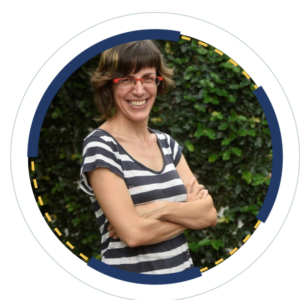
Laura Alonso Alemany
Short Bio:
She holds a Ph.D. in Linguistics (specializing in Computational Linguistics) from the Interuniversity Program in Cognitive Science and Language, as well as a Bachelor’s Degree in General Linguistics from the University of Barcelona. She has extensive experience in undergraduate and postgraduate teaching. She is a member of the Natural Language Processing research group at FaMAF (Faculty of Mathematics, Astronomy, Physics and Computation) at the National University of Córdoba.
She is also a member of the Grial research group in Catalonia, where she completed her doctorate, and works on rich representations of sentence semantics for corpus annotation and automatic knowledge acquisition within the SENSEM project.
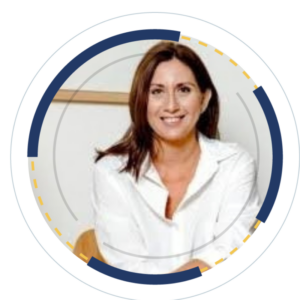
Vanessa Lopez Schaufele
Short Bio:
She is an organizational psychologist and executive coordinator of Espacio Mujeres TEC at the Córdoba Secretariat for Women. She leads initiatives focused on innovation, talent development, and boosting women’s participation in technology by building partnerships across governments, companies, universities, and international organizations. She brings over ten years of experience in organizational culture, leadership, and the implementation of high-impact programs across Argentina and Latin America.
Isabel Pedraza
Short Bio:
She is a full-time professor with a solid background in higher education, specializing in computational physics, physics, and data science. She is a distinguished professional in technological research and development within the European Organization for Nuclear Research (CERN). She holds an Executive MBA with a concentration in business administration and management.
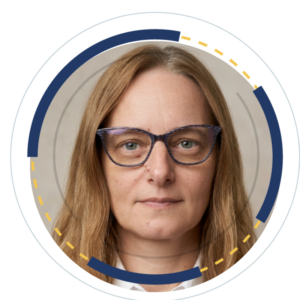
Sonia Permigiani
Short Bio:
She holds a Bachelor’s Degree in Computer Science and a Systems Analyst degree from the National University of Río Cuarto (UNRC). She is currently in the final stage of her Ph.D. in Computer Science at the Faculty of Mathematics, Astronomy, Physics, and Computation (FaMAF) of the National University of Córdoba.
She currently serves as an Assistant Professor (Jefa de Trabajos Prácticos) in the Department of Computer Science at UNRC, teaching algorithms, data structures, and algorithm design. She was also part of the teaching staff for the Higher Education Teacher Specialization Program in Computer Science Didactics, registered under the Provincial Network for Continuous Teacher Training.
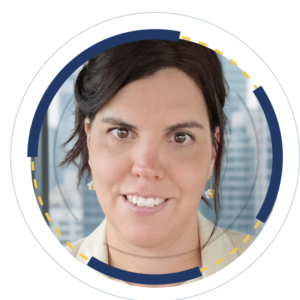
Cecilia Noelia Kilmurray
Short Bio:
She holds a Bachelor’s Degree in Computer Science from the National University of Río Cuarto (UNRC) and a Ph.D. in Computer Science from the Faculty of Mathematics, Astronomy, Physics, and Computation (FaMAF) at the National University of Córdoba.
She currently serves as an Associate Professor in the Department of Computer Science at UNRC, where she teaches courses related to algorithms, discrete mathematics, and logic. She is also a faculty member in the Advanced Diploma Program in Artificial Intelligence and was part of the academic and teaching committee for the Advanced Diploma Program in Computer Science Didactics for Teaching, both UNRC initiatives aimed at training professionals and educators.
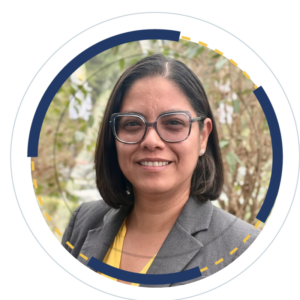
Katerine Saleme Ruiz
Short Bio:
Katerine Saleme Ruiz is a computational mathematician with a PhD in Computational Engineering from Mississippi State University. Her research interests focus on understanding fracture mechanisms affecting brittle materials’ microstructural and mechanical properties.
Katerine is currently a member of the Grant Management team at the Faculty of Science, Technology and Medicine at the University of Luxembourg. She plays a vital role in the EUMaster4HPC program, the flagship European initiative for developing a specialized HPC workforce, where she focuses on coordinating educational activities and fostering collaboration across the European supercomputing ecosystem. Combining technical expertise with a commitment to knowledge transfer, she facilitates training and user support to empower researchers in leveraging large-scale systems for scientific innovation.
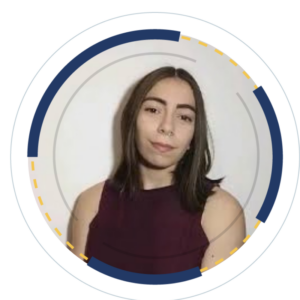
Milagros Carabelos
Short Bio:
She is an advanced Computer Science student and has been a member of Carpinchos HPC since 2024, the only Argentine team competing in international supercomputing challenges. She has participated in three student HPC competitions—one remotely and two in person—representing Argentina in the United States and China at the IndySCC and the ASC Student Cluster Competition.
| Time | Session | Presentation Title | Speaker |
|---|---|---|---|
| 9:00 – 9:10 | Openning | Verónica Gil-Costa | |
| 9:10 – 10:00 | Invited Talk | Laura Alonso | |
| 10:00 – 10:30 | Discussion Panel | “Retos de las mujeres en la era de la IA” |
Sonia Permigiani (UNRC) Cecilia Kilmurray (UNRC) Isabel Pedraza (BUAP-Mex) Katerine Saleme Ruiz Vanessa Lopez Schaufele (Espacio TEC) Modera: Gina Maestre Góngora |
| 10:30 – 11:00 | Coffe Break | ☕ Coffe Break | |
| 11:00 – 11:20 | Invited Talk | Competencia HPC China | Milagros Carabelos |
| 11:20 – 11:50 | Invited Talk | Espacio Mujeres TEC | Vanessa Lopez Schaufele (Espacio TEC) |
| 11:50 – 12:20 | Invited Talk | Isabel Pedraza (BUAP-Mex) | |
| 12:20 – 13:00 | Posters | Session Poster |